Running Roadball
- 4.6
- Rating
- 10.00M
- Installs
- Free
- Price

 Analysis by App-foxy
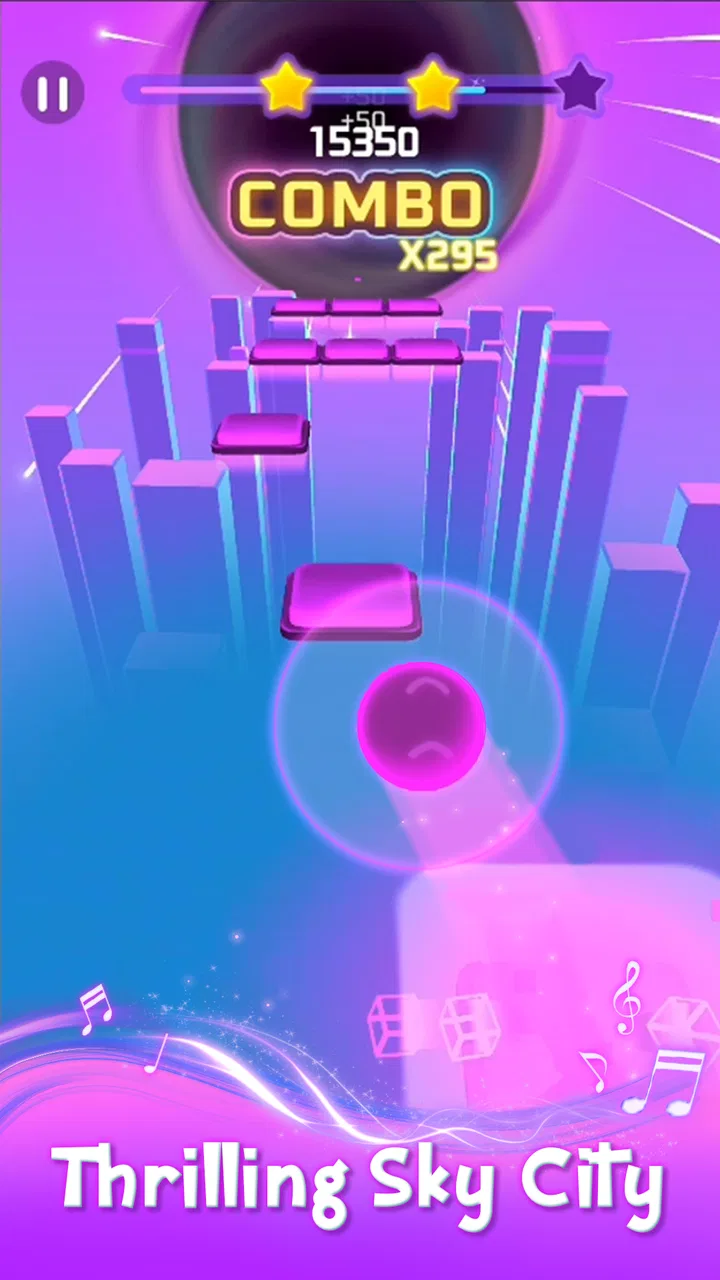
Running Roadball is the kind of music game I can understand immediately: I guide a moving ball across colored tiles while trying to stay with the rhythm. The idea is simple enough to learn in a few seconds, but the timing gives it a little more tension than a normal endless runner. I do not need a long tutorial or a complicated control scheme before playing, which makes it especially easy to pick up during a short break.
After spending time with it, my opinion is positive but measured. The first sessions have a satisfying “one more try” quality, and the music gives each run more personality than a purely visual obstacle game. At the same time, its long-term appeal depends heavily on whether I still enjoy repeating the same basic loop after the initial novelty disappears. This is not a deep rhythm simulator or a large adventure game. It is a focused, free music game built around quick reactions and repeated attempts.
What the first week feels like
The opening appeal comes from how quickly the game communicates its purpose. The ball keeps moving, the tiles create the route, and my attention naturally shifts between the color pattern and the beat. I found that I could start playing without mentally preparing for a complicated ruleset. That low entry barrier is one of its strongest qualities.
You May Also Like

 Blood Strike: 2.5 Anniversary
Blood Strike’s Loadouts Turn Every Drop Into a Tactical Gamble
A close look at Blood Strike’s custom loadouts: how fast access to signature weapons reshapes its battle royale rhythm, rewards preparation, and narrows the gap between fights.

 Pandora - Music & Podcasts
Pandora’s Music Is Easy to Start, but Harder to Recover
Pandora’s strength is its low-effort path from a seed to a station. Its weak spot is how much confidence it asks you to place in connection, setup, and quiet recovery.

 8 Ball Pool
 Is Built on Rivalries, Rematches, and Routine
A close look at the rivalries, rematches, shared routines, and unanswered safety questions that turn a quick pool match into a persistent mobile community.

 Samsung Music
’s Quiet Strength Is Playing What You Already Own
Its reach comes less from spectacle than from dependable access to a personal library. That simplicity is both the app’s strongest retention engine and its ceiling.

 AccuWeather: Weather Radar
AccuWeather Review: A Quick, Clear Forecast for Everyday Decisions
For everyday plans, the best forecast is the one you can understand quickly. AccuWeather makes rain timing, radar, and local conditions easy to act on, with a few trade-offs.

 Hill Climb Racing
Why Hill Climb Racing Still Turns Crashes Into One More Run
A tiny car, a bumpy hill and one more upgrade: Hill Climb Racing keeps resurfacing because its simple chaos makes every near-miss feel personal.
More From Our News Desk
View All News


In the first few sessions, the challenge feels pleasantly active rather than exhausting. I am not managing an inventory, reading dialogue, or waiting through long menus. The focus stays on keeping the ball moving correctly. When I miss, the failure is easy to understand: my timing or movement was not good enough. That clarity makes restarting feel reasonable instead of frustrating.
The music matters more than it might seem from the short premise. Without an audio connection, the colored tiles would be little more than a visual reaction test. With the music in the background, I start anticipating the next movement instead of reacting only after it appears. I also noticed that my performance changed depending on how closely I listened. Playing casually while distracted made the route feel much less predictable.
For a realistic everyday use, I can see myself opening it while waiting for a bus, taking a short break between tasks, or looking for something light before bed. A run does not demand the same commitment as a full console session. I can play for a few minutes, stop, and return later without needing to remember a story or a complicated objective. That makes it more practical than many larger music games.
The first week is also when the game benefits most from discovery. I am learning how the tiles relate to the beat, how quickly I need to respond, and how much attention the route requires. Even small improvements feel noticeable because the control idea is so concentrated. The experience rewards rhythm awareness and visual focus rather than broad strategic planning.
My most useful early tip is to avoid treating every movement as an emergency reaction. I had better results when I watched the next section of the path and used the music to prepare my timing. Looking only at the ball can make the route feel faster than it really is. This is a small adjustment, but it changes the game from frantic tapping into something more controlled.
Another practical habit is to play with a stable grip and limited distractions. Because the game depends on timing, a notification, a conversation, or a noisy environment can break concentration more severely than in a casual matching game. I would not call it demanding in the same way as a competitive action title, but it does ask for a clean attention window.
The game is free to download, which makes that first-week experiment easy. Optional in-app purchases range from less than a dollar to several dollars per item, so I can try the core experience before deciding whether any extras are worth paying for. I appreciate that the basic decision is simple: install it, play it, and judge the loop rather than committing money first.
Its audience is broad. The content rating is Everyone, and the straightforward presentation should suit players who want something accessible rather than intense or story-heavy. Parents may still want to handle purchase settings on a shared device, but the actual play concept is easy to understand. I would recommend it first to people who enjoy music-driven reflex games and short repeatable sessions.
Where the early appeal can mislead
The same simplicity that makes Running Roadball approachable can also make the first week feel more substantial than the later weeks. Early improvement creates a strong sense of progress because I am learning the timing from scratch. Once that learning curve flattens, the question becomes whether the music and moment-to-moment control are enjoyable enough on their own.
This is important when comparing it with usual alternatives in the music category. A traditional rhythm game may offer more note types, song selection, scoring detail, or structured progression. An endless runner may provide more emphasis on collecting, unlocking, or route variety. Running Roadball sits between those ideas: it uses the immediacy of a runner and the timing appeal of a music game, but its attraction is concentrated in the act of staying on the path.
That focus is a strength if I want a clean, uncomplicated challenge. It is a weakness if I need a large amount of content or a sense of long-term collection. I would not install it expecting a campaign, a social competition, or a deep customization system. I would install it because moving with the music sounds enjoyable and I want something I can understand instantly.
Whether it earns a place after the novelty
I use the novelty test to decide whether this kind of compact rhythm game deserves space on my phone: after the first learning burst, do I still want another run? For me, the answer depends on enjoying the beat-and-path focus itself, not on expecting a stream of new systems. That makes a quick, deliberate check-in more useful than judging it by one unusually good or frustrating session.
Month-to-month value depends on the core loop
After the initial excitement fades, I judge this game less by its premise and more by how often I genuinely want to return. The central loop remains easy to access: launch the game, follow the colored tiles, listen for the rhythm, and try to improve. That repeatability is useful for short sessions, but it also means the game has limited room to hide repetition.
I can imagine keeping it installed if I use it as a small reflex exercise rather than as my main game. It works well in the gaps of the day because it does not require a long narrative commitment. A few attempts can give me a sense of focus, especially when I want something more active than scrolling but less involved than a full game.
The trade-off is that its recurring value is personal. Players who enjoy chasing cleaner timing may continue finding satisfaction in the same basic format. Players who need frequent new mechanics may move on quickly. I would describe it as a game that can become a habit for the right player, not one that automatically creates a habit for everyone.
A useful way to test that is to notice what motivates the return. If I come back because I enjoy matching movement to music, the game has a solid chance of lasting. If I return only because the first sessions produced easy improvement, the appeal may disappear once my progress slows. That distinction helped me separate genuine replay value from the temporary excitement of learning a new control pattern.
The developer, HUMSHAN LIMITED, presents a compact concept rather than an overloaded package. I like that the game knows what it is trying to do. Still, a compact concept needs consistently enjoyable execution to remain interesting over time. The absence of extra layers is not automatically a flaw, but it makes every small moment of repetition more noticeable.
The current version is 0.0.19, and the game was released on January 14, 2025. Those details place it relatively early in its life, so I would keep expectations realistic about how fully established the experience feels. I would not judge it by the standards of a mature rhythm franchise with years of accumulated modes and content. Its value today comes from the playable loop that is already there.
Its audience size suggests that the idea has reached well beyond a tiny experiment: the game has passed five million installs and holds a 4.5 average from around ten thousand ratings. Those figures do not decide whether I personally enjoy it, but they do make it easier to see Running Roadball as a recognizable mobile game rather than an obscure curiosity. The listed review count is forty-four, though I put more weight on trying the loop myself than on any single public reaction.
Maintenance is light, but attention is the real cost
From a practical standpoint, this is not a game that asks me to maintain a complicated routine. I do not need to manage a large roster, remember daily objectives, or keep track of a long chain of upgrades to enjoy a session. That low maintenance is a genuine advantage for people who dislike games that turn into second jobs.
The maintenance burden appears in a different form: keeping my timing sharp. If I leave the game for a while, I may need a few attempts to recover the feel of the rhythm and the pace of the route. That is not a heavy penalty, but it means the game can feel less inviting after a long break than a puzzle with no time pressure.
I also found that sound conditions affect the experience. Since music is part of the identity of the game, playing silently or in a loud environment can reduce the reason to choose it over a basic runner. Headphones may help when I want to concentrate, although I would still keep the volume comfortable and remain aware of my surroundings outside the game.
For storage and device compatibility, the minimum operating system is Android 7.0. That makes it approachable for people using older Android hardware, though actual comfort can still depend on the device and the player’s sensitivity to timing. I would test the controls before making it a regular game on an older phone, especially if precise response matters to me.
The purchase model is another part of the maintenance question. The game costs nothing to start, while individual in-app purchases run from $0.99 to $6.99. I would treat those purchases as optional spending rather than part of the basic reason to install it. If I am trying to preserve the game’s casual role, setting a personal limit before buying anything is sensible. The moment a short music game begins to feel like something I must keep spending on, its relaxed appeal changes.
What creates fatigue over repeated sessions
The main source of fatigue is not complexity; it is concentration. Following a moving route to a beat can be enjoyable for a while, but the same focus can become tiring when I play continuously. I get more value from several short sessions than from forcing myself through a long sitting.
Repetition is the second issue. The core action is clear and satisfying, but it does not offer the broad variety I would expect from a larger music game. If I am searching for many distinct songs, elaborate progression, or a wide collection of play styles, this may feel narrow. The game’s simplicity is best enjoyed in moderation.
There is also a risk of confusing difficulty with depth. A challenging run can make me want another attempt, but a harder version of the same interaction does not necessarily add a new strategic layer. I would be careful not to assume that repeated failure means the game is becoming richer. Sometimes it simply means I need better timing, and that is enough for a short-session game but not enough for every player over months.
My practical solution is to stop while the game still feels satisfying. Ending after a good run preserves the sense that I made progress, while continuing until every attempt feels irritating can make the whole game seem worse than it is. This is one of those titles where session length strongly affects my opinion.
I would also skip it if I want a calm, low-attention experience. Although the presentation is approachable, the play itself is not passive. It asks me to watch, listen, and react. For relaxation without concentration, a simple puzzle, idle game, or music-listening app would be a better fit. For a rich rhythm library or competitive depth, a more established alternative would likely serve me better.
Who should keep playing, and who should move on
I think Running Roadball is a good match for someone who likes quick music challenges, prefers learning through repetition, and wants a game that can be understood immediately. It is also suitable for players who are tired of mobile games overloaded with menus and systems. The clean concept lets me spend most of my time playing rather than organizing the experience.
I would recommend caution to anyone who needs constant novelty. If I expect a deep campaign, extensive customization, or a large menu of fundamentally different activities, this is probably not the right choice. The game can provide recurring value, but that value comes from refining timing and enjoying the rhythm, not from a broad progression system.
For a new player, my advice is to give it several short sessions instead of making a decision after one rushed attempt. The first try may feel awkward because I am still learning to combine what I see with what I hear. By the third or fourth session, I have a better idea of whether the timing itself is enjoyable. If it still feels like work at that point, more practice is unlikely to transform it into the right kind of game for me.
The lasting test is simple: do I enjoy the next run even when there is nothing new to discover? That question matters more here than the size of the install base or the attractive first impression. Running Roadball earns its place when the act of following the music remains satisfying on its own.
My long-term verdict
Running Roadball is a focused, accessible music game with a strong first-week hook and a modest long-term promise. I like its immediate controls, its short-session usefulness, and the way the colored route gives the music a physical shape. It is easy to recommend as a free experiment, especially for Android players on version 7.0 or newer who want a quick game rather than a major time commitment.
My reservation is equally clear: the game’s lasting value rests almost entirely on how much I enjoy repeating the central movement-and-rhythm loop. It does not need to become a huge, complicated product to be worthwhile, but it does need to remain pleasant after the learning phase ends. For me, it works best as a compact game I revisit in short bursts, not as the only music game on my device.
The age rating of Everyone and the free starting price make it approachable, while the optional purchases mean I can decide later whether spending adds enough value. I would keep those purchases separate from the basic recommendation: the game should first prove that its timing and music are worth returning to without pressure.
Overall, I would recommend Running Roadball to casual rhythm fans, people who enjoy reflex-based runners, and anyone looking for a quick distraction with more musical character than a standard endless path. I would steer players seeking deep progression, wide song variety, or a constantly changing experience toward a larger alternative. For the right audience, though, its restraint is exactly what makes it appealing: it asks me to listen, react, and try again without burying that simple pleasure under unnecessary systems.
FAQs for Running Roadball
01What is Running Roadball and how does it work?
Running Roadball is an engaging mobile game where players navigate a ball through a winding road filled with obstacles and challenges. The objective is to keep the ball rolling without falling off the track or hitting obstacles. Players can swipe to control the ball's direction and speed, making it a test of reflexes and strategic planning.
02Is Running Roadball free to download and play?
Yes, Running Roadball is free to download and play. However, it may include in-app purchases for items like power-ups, extra lives, or ad-free experiences. While the basic version is entirely playable without spending money, these optional purchases can enhance the gaming experience.
03What devices are compatible with Running Roadball?
Running Roadball is available for both Android and iOS devices. It requires Android version 5.0 or later and iOS version 10.0 or later. Ensure your device meets these requirements for optimal performance. The game is designed to run smoothly on most smartphones and tablets that meet these specifications.
04Does Running Roadball require an internet connection to play?
Running Roadball can be played offline, making it a great option for gaming on the go. However, certain features like leaderboards, social sharing, and in-app purchases may require an internet connection. Playing offline won’t affect the core gameplay, allowing players to enjoy the game without connectivity.
05What are some tips for beginners in Running Roadball?
For beginners, it’s crucial to focus on mastering the swipe controls to navigate the ball effectively. Start by playing slower levels to get a feel for the game mechanics. Pay attention to patterns in obstacle placement, and use power-ups strategically to overcome challenging sections. Practice will help improve reflexes and game strategy.
Pros
- Engaging level design keeps you hooked.
- Smooth controls enhance user experience.
- Vibrant graphics create visual appeal.
- Regular updates add new challenges.
- Offline mode available for on-the-go fun.
Cons
- Frequent ads can disrupt gameplay.
- Limited customization for characters.
- In-app purchases needed for faster progress.
- Occasional lag on older devices.
- Soundtrack can become repetitive.

Running Roadball
Gallery